The high cost of poor insurance claim photo evidence
Your personal camera roll is for holidays, not for securing your business. When you need to prove work was completed or document damage, standard photos from your phone are not enough. They lack the verified metadata required to stand up to scrutiny.
Insurers now use sophisticated systems to flag manipulated images, which can lead to delayed or rejected claims. A lost photo can mean a lost invoice. For many contractors, the current system for managing photo evidence is broken.
According to rules of evidence), this is a well-documented area of ongoing research and practical application.
Why your personal phone gallery fails you
Mixing work photos with private memories makes them difficult to find and unprofessional to share. More importantly, standard image files can be edited, which immediately makes loss adjusters suspicious of their authenticity. You cannot easily search a normal gallery for a specific 'concrete pour' from 14 July 2025.
The rise of insurance fraud and AI fakes
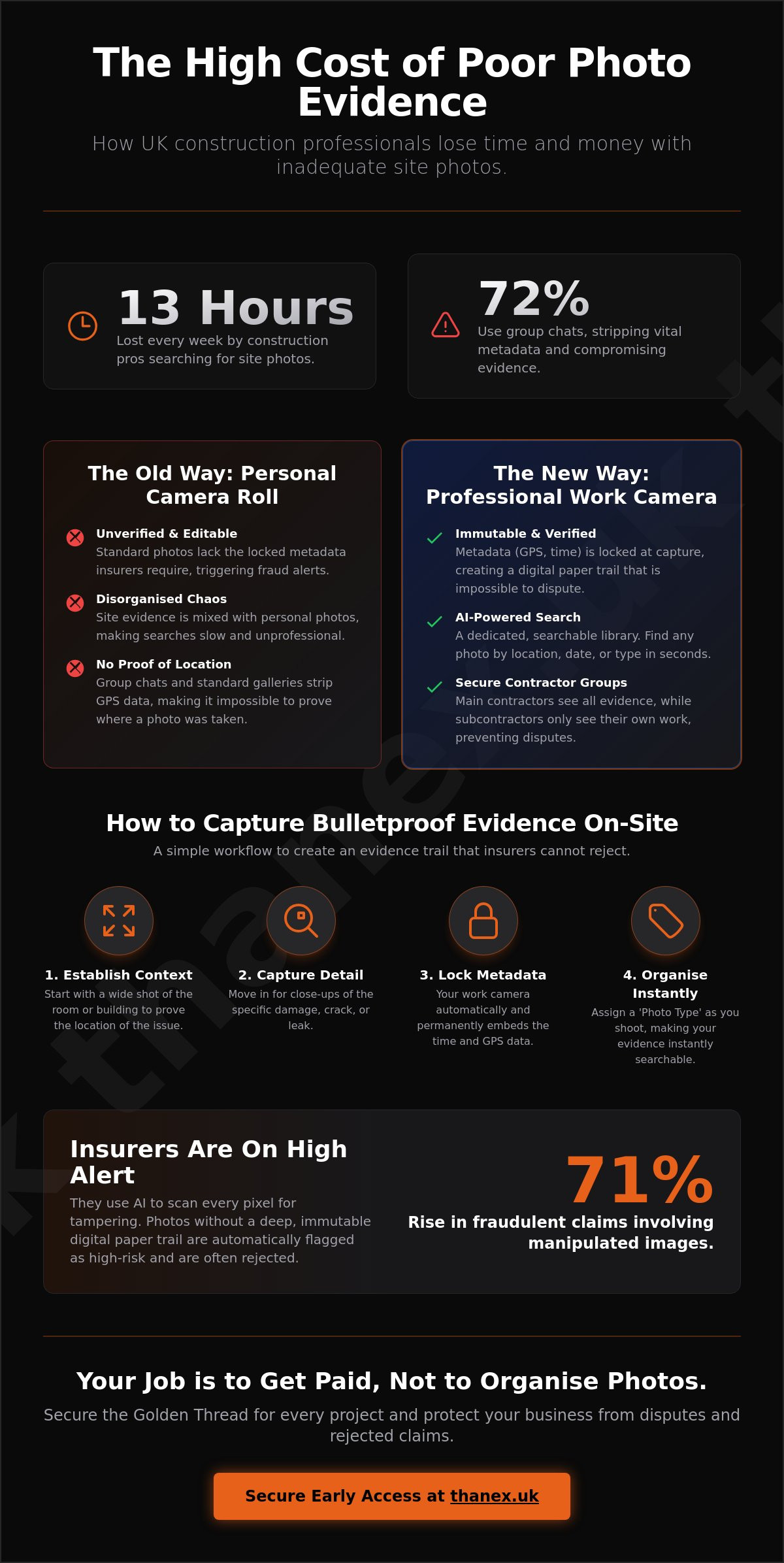
Loss adjusters are trained to spot inconsistencies. With 72% of UK construction professionals using group chats to share site updates, vital evidence is being compromised. These apps often strip away metadata and compress images, weakening your position in a dispute.
Without a verifiable GPS stamp, you cannot prove a photo was taken at the correct site. Without a locked-in timestamp, you cannot prove when the work was done. This lack of proof leaves you exposed.
How to capture bulletproof evidence on site
To create insurance claim photo evidence that gets you paid faster, you need to think like a loss adjuster. Follow these steps to build an undeniable record of your work.
- Capture the wide shot first. Start with a broad view of the area to provide context for the entire scene. Include surrounding road markings, building signs, or landmarks to establish the exact location beyond doubt.
- Document the 'before' and 'after'. Take photos of the site's condition before you begin work to prevent disputes about pre-existing damage. Immediately after finishing, capture the completed work to prove the quality of your service.
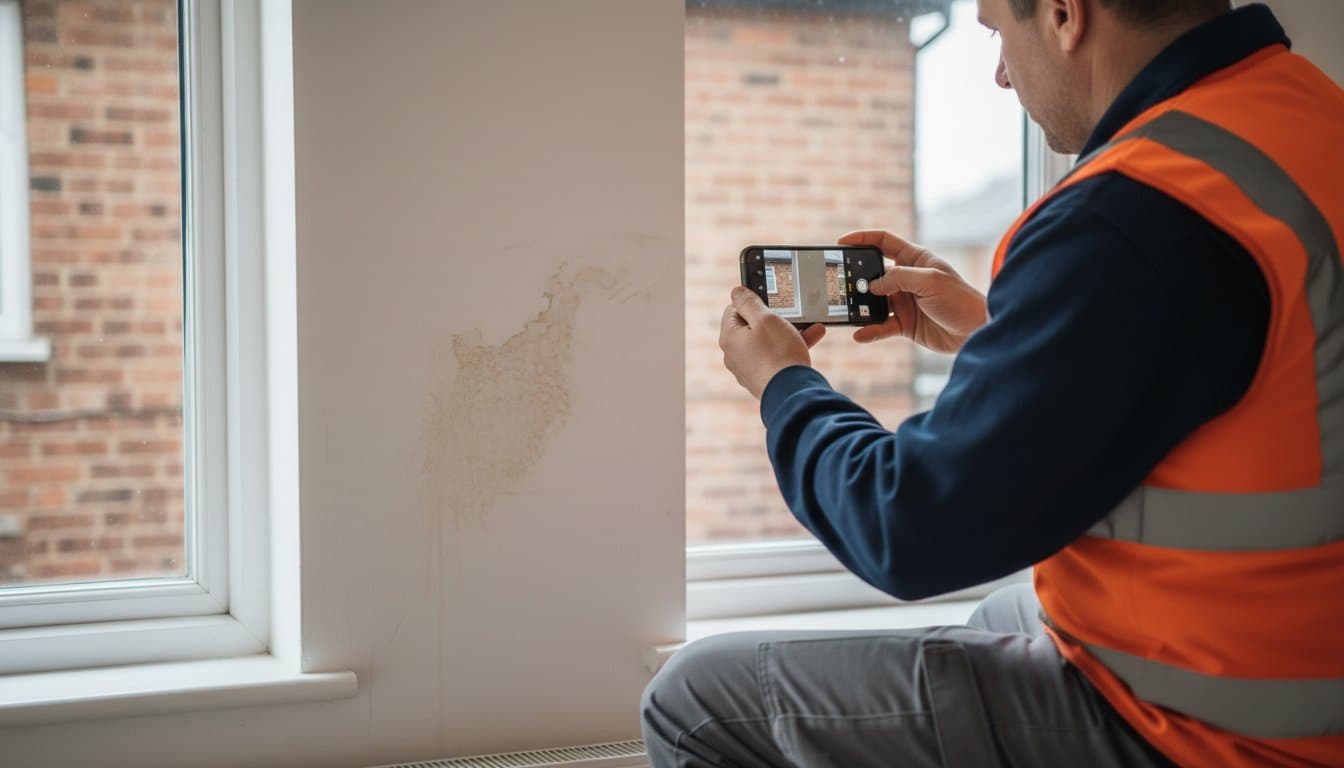
- Move in for the close-ups. After establishing context, take detailed close-up shots of the specific damage or the finished installation. This is the core of your evidence.
- Use a work camera with immutable metadata. Every photo must have its GPS coordinates and timestamp locked at the moment of capture. Immutable metadata is data that cannot be changed after it is created, providing absolute proof of where and when a photo was taken.
Managing main contractor and subcontractor communication
Communication gaps between main contractors and their subcontractors often lead to blame-shifting during insurance claims. A shared, transparent evidence record is the only way to ensure everyone is accountable.
Accountability through Contractor Groups
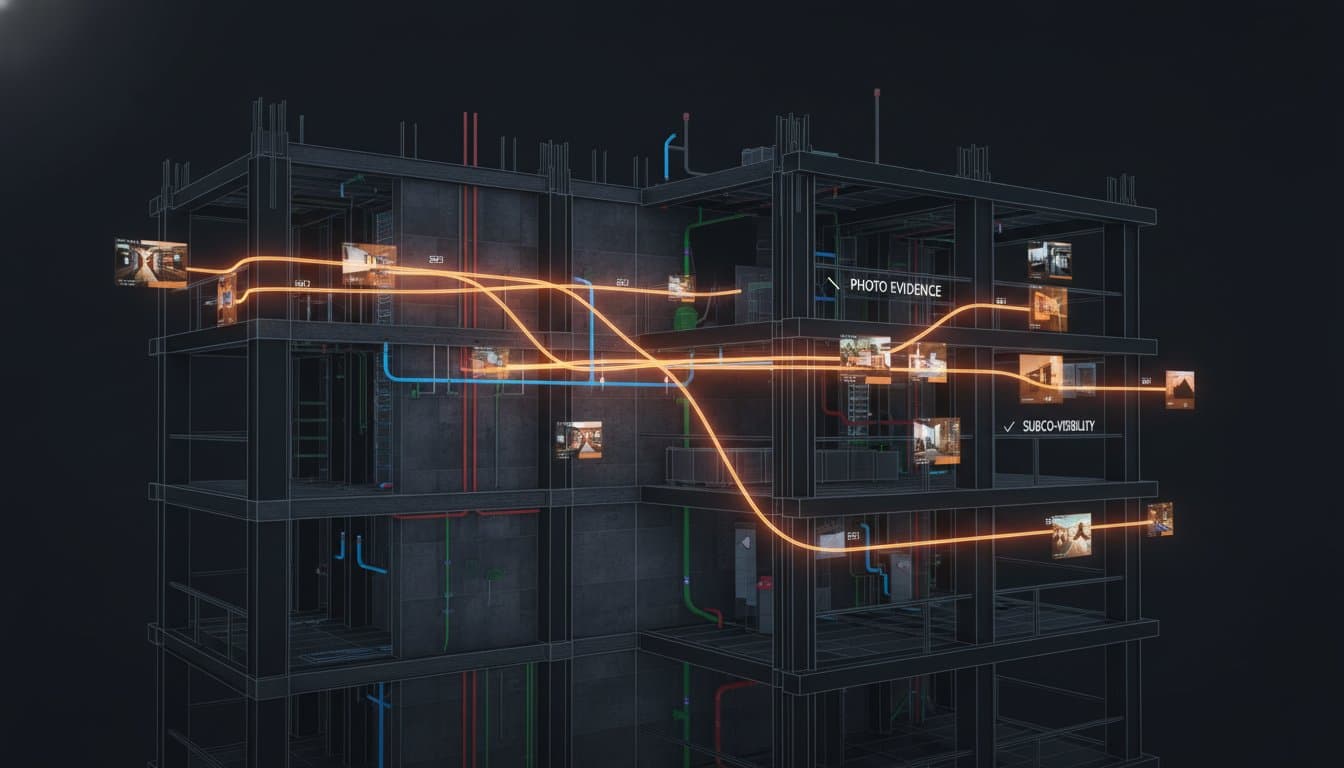
Use a system with a Contractor Groups feature to ensure everyone is looking at the same evidence. This allows main contractors to see all photos from a project, whilst subcontractors can only see the photos they have taken. This clear visibility reduces disputes and the need for constant phone calls.
You can assign specific Photo Types to subcontractors so their work is easily identified and tracked. Instead of emailing hundreds of individual files, you can simply provide a link to a report containing all the necessary evidence. Learn more about improving site visibility for construction projects.
Avoiding the group chat trap
Group chats are where evidence goes to die. Photos get lost amongst hundreds of unrelated messages, and messaging apps compress images, stripping them of their quality and metadata. A dedicated work camera keeps professional evidence separate from the daily chatter, ensuring its integrity is preserved.
Finding the evidence you need in seconds
Searching for specific site photos manually costs UK contractors an average of 13 hours per week. When a loss adjuster requests proof on short notice, you cannot afford to waste that time. You need to find the right photo instantly.
The AI-queryable work photo library
Your AI assistant queries your library using the Photo Type and metadata captured on every shot. When you ask a question like 'show me the leaking pipe at the Maidstone site', it pulls the matching photos and reads them visually to answer you. You no longer spend Sunday evenings sorting photos into folders or renaming files.
This speed comes from capturing the right information from the start. Taking one extra tap on site to assign a Photo Type saves you hours of administrative work later.
Generating Shareable Report Links
When you need to submit a claim, you can create a professional Shareable Report Link to send directly to your insurance provider. These reports include all the necessary immutable metadata to prove the time and location of the work, helping to accelerate the approval process.
Secure your business with a professional work camera
Your job is to manage projects and get paid, not to organise photos. Stop the admin frustration and start using an evidence record designed for the chaos of a work site.
Regulatory readiness for the Building Safety Act
The concept of a Golden Thread requires a digital record of every stage of a building's life. A professional work camera provides this security for every project you touch, creating an auditable trail of evidence.
The Golden Thread obligation applies in full to Higher-Risk Buildings, defined as residential buildings over 18 metres or seven storeys. If you work on HRB projects, digital evidence is no longer optional. Maintaining a robust work photo evidence record protects you during audits and safety inspections, ensuring your records meet UK standards.
Getting started with Thanex
Transitioning to a professional system is simple. It requires only one extra tap on site to capture evidence that is automatically organised and instantly searchable. Join the contractors who are reclaiming their lost time every week.
Thanex launches May 2026. Get early access at thanex.uk/early-access.
Frequently asked questions
Is photo evidence enough to win an insurance claim?
High-quality photo evidence with immutable metadata is one of the strongest tools you have. While insurers consider all aspects of a claim, photos that prove the time, date, and location of your work can significantly speed up payouts and prevent disputes before they start.
Can I use photos from a group chat for an insurance claim?
It is not recommended. Photos sent via group chats are often compressed, losing quality, and stripped of their original metadata. This makes them less credible as evidence and more likely to be questioned by a loss adjuster.
What is the Building Safety Act and how does it affect my photos?
The Building Safety Act 2022 requires a 'Golden Thread' of information, which is a digital record of a building's data. For contractors, especially those working on Higher-Risk Buildings, this means maintaining a verifiable photo record of your work is essential for compliance and safety audits.
How much time do contractors usually lose searching for photos?
Studies show that UK construction professionals can lose up to 13 hours per week searching for specific project data, including photos. This administrative burden directly impacts productivity and project profitability.
What metadata do insurers look for in a photo?
Insurers prioritise metadata that proves authenticity and cannot be easily altered. The most critical pieces are immutable GPS coordinates to confirm the location and a locked-in timestamp to confirm the exact date and time the photo was taken.
How does a work camera differ from a standard photo app?
A standard phone camera is designed for personal use, mixing work and private life. A work camera is a professional tool that keeps evidence separate, automatically attaches immutable metadata (GPS and time), and organises photos into a searchable library to protect your business.
Can subcontractors see my other project photos in Thanex?
No. The Contractor Groups feature is designed for privacy and accountability. Main contractors can view all photos submitted for a project, but each subcontractor can only see the photos that they have personally captured and submitted.
What happens if I cannot find the photo evidence for a claim?
Without verifiable photo evidence, your claim may be delayed or denied. You enter a 'he said, she said' situation that can lead to lengthy disputes. The legal and administrative costs of defending your position can cost your firm significantly more than the original invoice value.