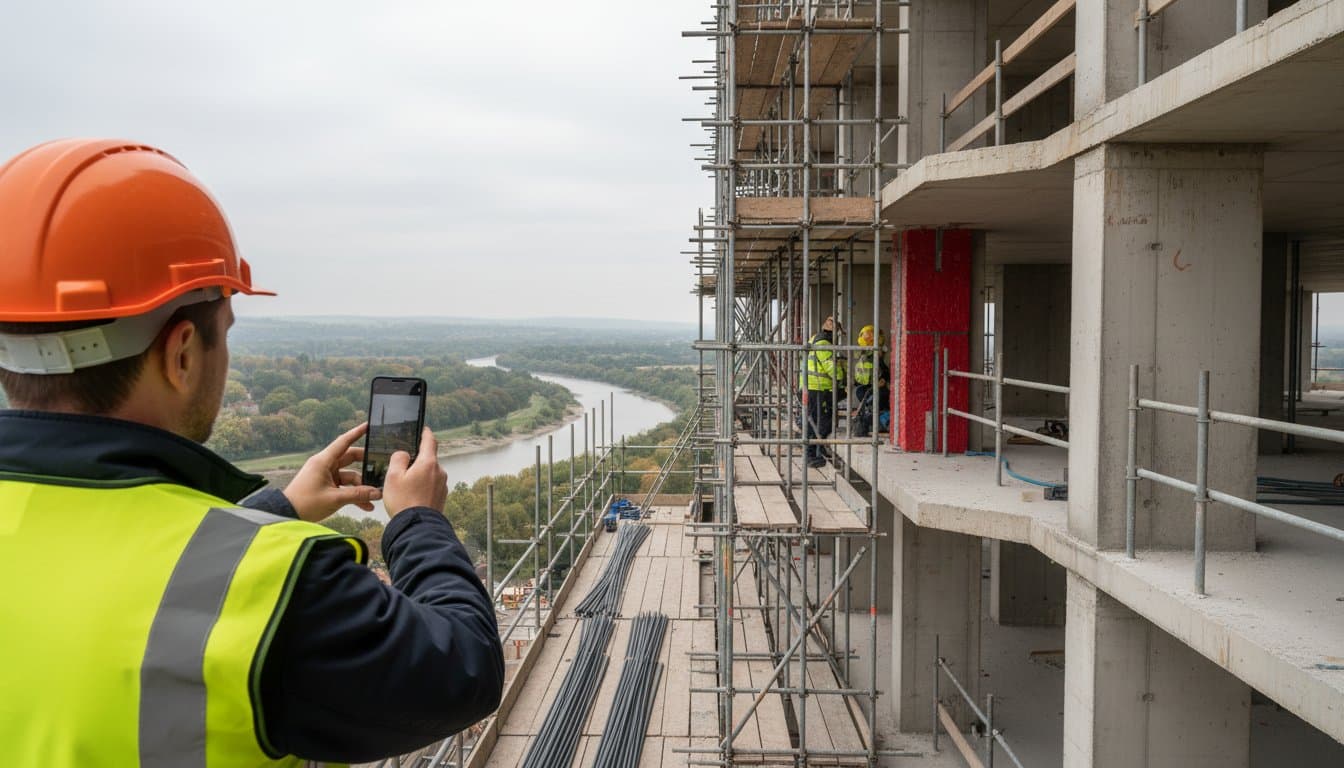
Friday evening. You are scrolling through a group chat. Hundreds of photos. No context. You need to find proof of fire stopping for a building over 18 metres. The Building Safety Regulator is watching. One missing photo could mean a massive fine or a delayed sign-off. It is exhausting.
You know the system is broken. You did not start a construction firm to spend 13 hours a week sorting through blurry photos from subcontractors. It feels like you are drowning in admin just to stay legal. Sound familiar?
This Golden Thread guide shows you how to turn site evidence into a defensible record with one extra tap. You will learn how to organise your work camera to meet every Building Safety Act requirement without the manual busy work. We will show you how to get faster project sign-off and stop losing your weekends to filing. You deserve a process that protects your time and your business.
Key Takeaways
- Identify which projects hit the 18-metre or 7-storey threshold for mandatory digital record-keeping.
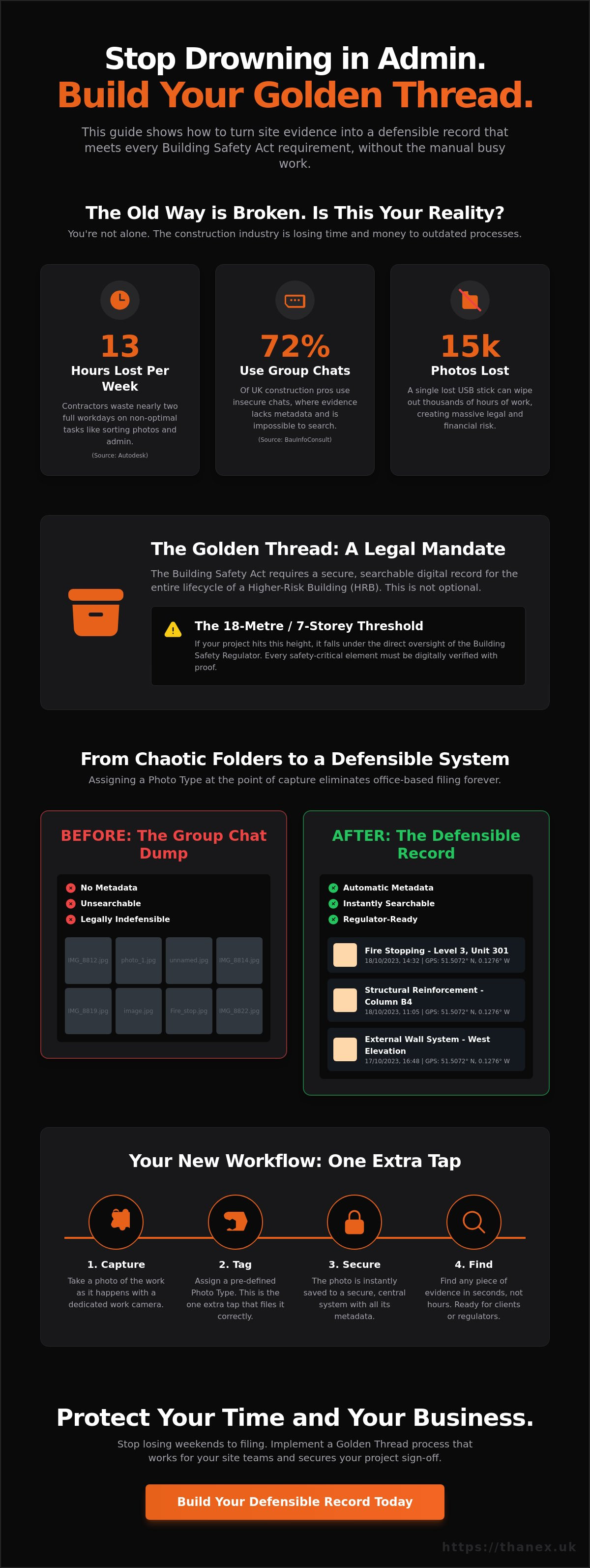
- Stop relying on group chats that lack searchable metadata, a habit shared by 72% of UK construction professionals.
- Follow this Golden Thread guide to build a defensible record of every safety-critical element on your site.
- Reclaim the 13 hours per week lost to manual admin so you can focus on finding clients and getting paid.
- Learn how assigning a Photo Type at the point of capture removes the need for office-based filing.
Understanding the Golden Thread requirements for higher-risk buildings
The Golden Thread is the digital spine of your building. It is a live record of how a structure was designed, built, and managed. If you are working on higher-risk buildings in the UK, this is not a choice. It is a legal mandate. This Golden Thread guide helps you navigate the shift from paper files to a single source of truth.
Your record must be digital. It must be secure. Most importantly, it must be searchable. If you cannot provide evidence of how a fire valve was installed three years ago, the Building Safety Regulator can stop your project from being occupied. That means no sign-off and no final payment. The system is broken, but your record-keeping does not have to be.
The 18-metre threshold and your legal duty
The rules change at the 18-metre or 7-storey threshold. If your project hits this height, you are under the direct oversight of the Building Safety Regulator. You must verify every safety-critical element against UK Building Regulations before moving to the next stage. This ensures accountability throughout the building's lifecycle.
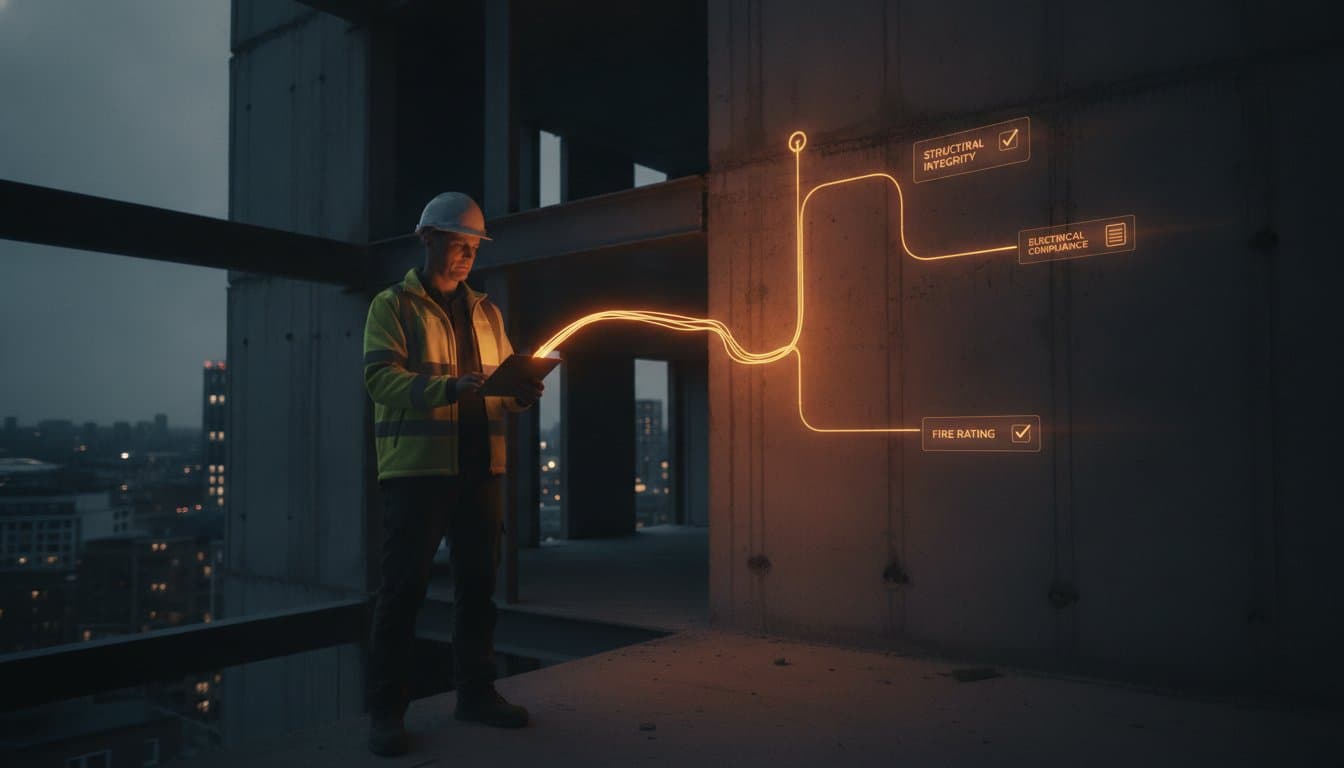
You need specific Photo Types for these milestones. This includes fire stopping, structural reinforcements, and external wall systems. Capturing these details is part of your professional utility. You can find more details on how this works for construction teams on our industry page. Without clear proof, you are gambling with your project's completion date.
Why digital security matters for your evidence
Manual filing is a risk you cannot afford. The founding of Thanex happened because 15,000 photos were lost on a single USB stick. That is thousands of hours of work vanished. It happens to the best teams. You rely on subcontractors to provide proof of work, but they often use group chats that lack metadata. This is not a defensible system.
You need a work camera that organises evidence at the source. One extra tap. Every photo secured. No more searching through broken folders or chasing subs for blurry images. Your job is to find clients and get paid. It is not to manage a chaotic gallery of site photos.
How to organise your digital evidence for the Building Safety Act
You are likely part of the 72% of UK construction professionals who use group chats for site updates, according to BauInfoConsult. It is fast. It is easy. It is also a regulatory nightmare. Group chats are where evidence goes to die. They strip away metadata and make searching for a specific fire-stopping photo impossible. The system is broken. Not you.
To follow this Golden Thread guide, you must stop treating site photos like social media. Every image needs to be a defensible record. This means every photo must include an automatic date, time, and GPS location stamp. If a regulator asks for proof of work from six months ago, you should find it in seconds, not hours. The UK Government Golden Thread Guidance insists on accessible, secure data. A messy phone gallery does not count.
Step-by-step workflow for site teams
Capture the work as it happens. Don't wait until the end of the day or the end of the week. Use a dedicated work camera that asks for a Photo Type before you even hit the shutter. This organises the evidence at the point of capture. One extra tap. Every photo filed. You can then generate shareable links for clients or inspectors instantly. Using a photo evidence system ensures your data stays in one place and remains searchable for years.
Managing subcontractor visibility
Site security is about control. As a main contractor, you need to see every photo across the entire project to ensure compliance. However, your subcontractors only need to see their own work. This prevents confusion and protects sensitive site data. Set clear expectations early. Tell your subs exactly which Photo Types they must capture. When they use a professional utility instead of a personal camera, the quality of your evidence improves immediately. Your job is to find clients and get paid. It is not to chase subs for proof of work they did three weeks ago.
Moving from chaotic photo folders to a defensible evidence system
Your job is to find clients and get paid. It is not to spend your evenings dragging files into folders or renaming blurry JPEGs. Autodesk found that contractors lose 13 hours per week on non-optimal activities like admin. That is real money lost to busy work. The system is broken. Not you.
A professional work camera changes the rhythm of your day. By following a Golden Thread guide strategy, you capture evidence as it happens. One extra tap. Every photo organised. No more scrolling through thousands of images on a personal phone to find proof of a specific fire seal.
This transition is about building a defensible library. When you use a system that works with your AI, you can find specific proof in seconds. You don't need to be a tech expert. You just need a tool that understands the chaotic reality of a job site and turns it into a structured record.
Getting paid faster with clear evidence
Disputes happen. Sign-offs get delayed. Detailed photo records are your best defence against these bottlenecks. They lead to fewer arguments and faster payments because the proof is undeniable. A defensible record protects your business from future claims and shows you have met every safety requirement. You can learn more about construction evidence management to see how this works in practice. Citing Building Safety Alliance Guidance adds a layer of professional weight to your site standards.
Preparing for the May 2026 launch
The May 2026 launch is a deadline for your workflow. You cannot rely on a personal camera roll for higher-risk buildings. It is time to move away from the chaos of unlabelled folders. Your record-keeping should be a professional utility, not a source of stress. Get your site evidence under control before the regulator asks to see it. Move from a broken system to a defensible one before the next inspection.
Build a defensible record for every project
The system is broken. You shouldn't be losing 13 hours every week to manual admin. By following this Golden Thread guide, you move from the chaos of group chats to a professional utility designed for UK Building Safety Act compliance. You gain a defensible record that works with your AI for instant retrieval. This ensures you are ready for any inspection without the weekend filing.
Main contractors now see every photo across the project whilst subcontractors only see their own work. This keeps site security tight and sign-offs moving. It is about getting paid faster and avoiding the fear of regulatory fines. One extra tap. Every photo organised. You no longer have to worry about missing evidence for fire stopping or structural elements.
Your job is to find clients and get paid. We built Thanex because we understand the reality of the job site. We are construction experts who believe the work of organising photos should not exist. Build with confidence.
Sign up for early access ahead of our May 2026 launch
Frequently Asked Questions
What is the 18-metre rule in the Building Safety Act?
The 18-metre or 7-storey threshold defines what the government calls a higher-risk building. If your project hits this height, you fall under the direct oversight of the Building Safety Regulator. You must maintain a digital record of every safety-critical element. This evidence is required to pass through the three Gateway stages. Without it, you cannot legally occupy the building. It is a strict rule for residential blocks and hospitals.
Can I use WhatsApp for Golden Thread evidence?
No, you should avoid using WhatsApp or other group chats for regulatory evidence. Whilst 72% of UK construction professionals use group chats according to BauInfoConsult, these platforms lack searchable metadata. You lose the exact date, time, and GPS location of the work. This Golden Thread guide suggests using a work camera that assigns a Photo Type at the point of capture. You need a defensible record, not a buried message.
Who is responsible for the Golden Thread on a construction site?
The Principal Contractor and Principal Designer hold the legal duty to manage this information during construction. They must ensure the digital record is created and kept up to date. However, site teams must capture the actual evidence. Main contractors see every photo whilst subcontractors see only their own work. This ensures the right people have the right proof. It stops the 13 hours per week lost to admin found by Autodesk.
How long must I keep Golden Thread photo evidence?
You must maintain the digital record for the entire lifecycle of the building. Regulations require this information to be kept for decades after the project is finished. Personal camera rolls and USB sticks will not last that long. Think of the 15,000 photos lost on a single USB stick from the Thanex founding story. You need a secure, AI-queryable library. This ensures safety-critical information remains findable for years to come.