You're sat at your desk on a Friday evening, staring at a "payment declined" email for the third time this month. The main contractor claims they cannot verify the reinforcement was inspected before the pour. You know the lads did the work, but you're stuck searching for how to timestamp construction photos in a way that the main contractor will actually accept. Right now, you're scrolling through thousands of personal photos, past pictures of your kids and last Sunday's roast, trying to find one specific snap of a rebar cage. Every minute you spend hunting is a minute of your weekend gone. Every missing date is money staying in their bank instead of yours.
It's a common frustration, but losing your profit to a lack of proof is a choice you don't have to make. This guide explains why a simple visual date is not enough and how professional metadata creates a defensible record of your progress. You will learn the specific methods for capturing site evidence that secures your payment milestones, protects your ITPs, and stops the administrative drain on your time. It is about moving from a gallery of random snaps to a professional documentation system that ensures you get paid for every fix.
Key Takeaways
- Discover how to timestamp construction photos to break the Loss Chain and stop unpaid invoices from stalling your cash flow.
- Stop losing weekends to manual batch processing or scrolling through your personal phone gallery to find site evidence.
- Learn why a simple visual date is not enough to satisfy Golden Thread requirements for buildings over 18 metres.
- Secure your ITPs with professional metadata that proves work was completed to standard before the lads cover it up.
The cost of missing proof: why timestamps matter for your business
You are looking at a valuation that has come back short. The main contractor refuses to pay for the drainage because they say there is no proof of the bedding depth. You know the work is right. The lads did it last Tuesday. But now the pipes are buried under two metres of soil and a concrete slab. This is where the Loss Chain begins. Without a timestamped photo, that work is effectively invisible.
A construction timestamp is much more than a clock on a screen. It is the digital record of the date, time, and exact location where you captured the image. When you are trying to figure out how to timestamp construction photos, you aren't just looking for a way to add text to a picture. You are looking for a financial shield. Without it, your retention is held, your payment milestones are missed, and you spend your Sunday evening scrolling through a messy camera roll instead of resting. You need a Golden Thread of information that proves your reputation is intact.
The difference between a visual stamp and metadata
Most people think a timestamp is just the orange text in the corner of a photo. These visual stamps are just overlays. They can be edited, moved, or faked with basic software. In a serious dispute, a visual stamp is weak. Professional proof relies on a trusted timestamping process that bakes metadata into the file.
Metadata is hidden data recorded at the exact second the lads press the shutter. It includes GPS coordinates and the original capture time that cannot be easily altered. Understanding how to timestamp construction photos with metadata is the only way to satisfy a clerk of works who is looking for reasons to hold your money. The UK Building Safety Act now prioritises these immutable records. For higher-risk buildings, having a simple edited image isn't enough to meet the new standards. You need the underlying data to prove the work was done on the day you claim.

How to timestamp construction photos: from manual chores to professional proof
You have finished the site walk. Your phone is full of snaps. Now you face the choice that determines whether you get home for dinner or stay chained to the office desk. Most managers struggle with how to timestamp construction photos because they rely on consumer tools for professional problems. If you are still using manual methods, you are paying for your admin with your own time.
Manual steps for the desktop-bound manager
The traditional route is a slow, manual grind. It starts with transferring hundreds of files from your phone, or chasing "the lads" for their WhatsApp photos. You then use software like IrfanView to batch process the images. You have to manually insert text overlays using the EXIF data. Finally, you save duplicates of everything. You have doubled your storage needs. You have created a digital mess. This process turns a site manager into an admin clerk. Every hour spent at the computer is an hour you aren't winning the next job.
The generic app trap
You might try a generic timestamp app from the app store. These are better than nothing, but they often save photos directly to your personal gallery. Your work evidence gets buried between family holiday shots and screenshots. These photos are key evidence in a construction dispute, but only if you can find them. If you cannot produce the photo the moment a client asks, the dispute is already lost. You shouldn't have to scroll through thousands of personal files to prove a waterproofing detail was right.
The professional way: capture with intent
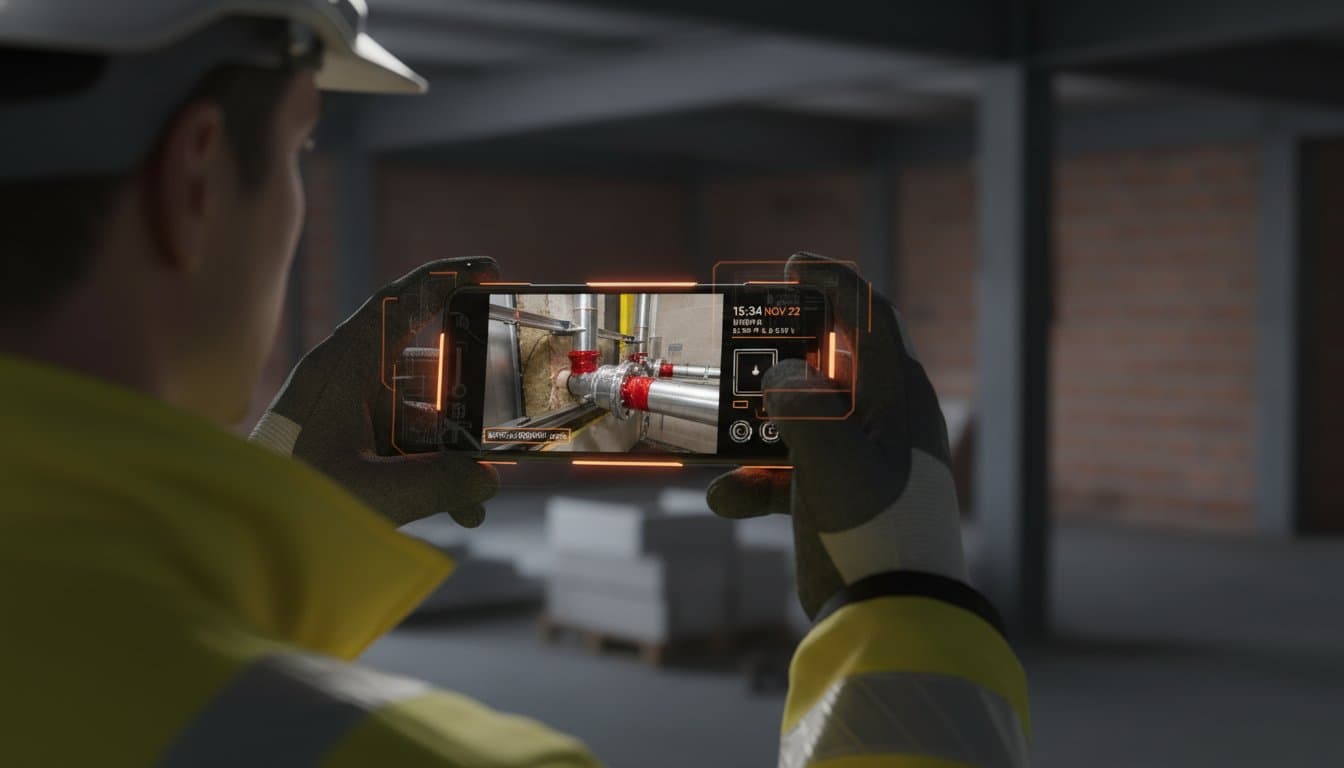
There is a faster way. It starts by using The work camera to document progress as it happens. Instead of fixing photos later, you select a "Photo Type" before you even press the shutter. This organises the metadata from the very start. The images go directly to secure cloud storage, not your device's camera roll. Every snap is tied to a specific project and job title. You build a clean QA pack in real time. No batching. No manual editing. No lost Sundays. You capture the work and you prove it fast.
Building the Golden Thread: documentation that pays
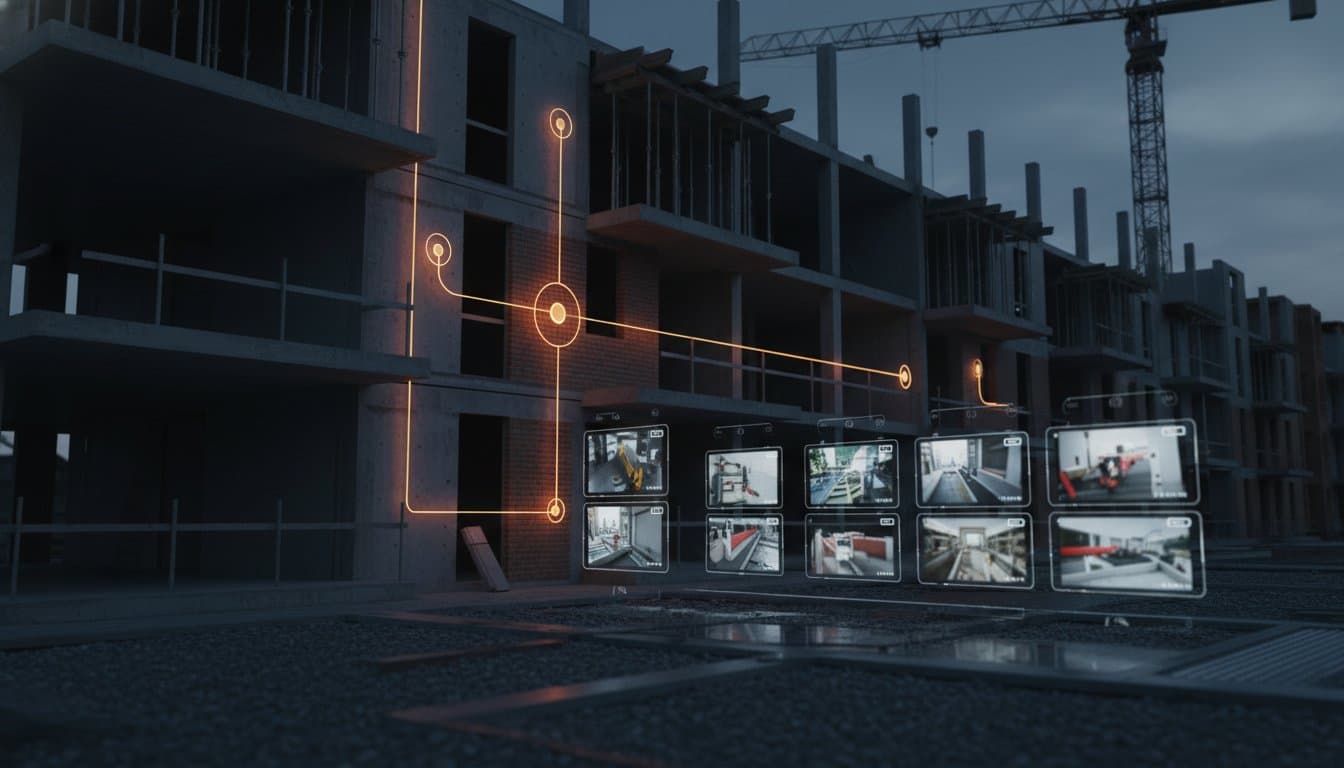
You are standing on the twelfth floor of a new residential block. The building safety regulator is asking for the fire-stopping records for the service risers three floors below. If you cannot produce them, the project stops. For higher-risk buildings over 18 metres, the Building Safety Act makes this digital record mandatory. It is no longer just about being organised. It is about legal compliance. A timestamped photo is the heart of your ITP. It proves you did not cut corners before the walls were closed up.
Meeting the 7-storey threshold with digital proof
In the UK, the 7-storey threshold requires a specific level of structural and fire-safety evidence. You cannot rely on vague gallery uploads. You need immutable metadata to prevent photos from being invalidated during a safety audit. This is why professional standards often reference a Trusted Timestamp Authority (TTA) to ensure data integrity. When multiple trades work on one floor, Job Title attribution becomes critical. It ensures the fire-stopper's work isn't confused with the dry-liner's progress. You need a clear, unbroken chain of information.
Getting paid faster on every project
Professional documentation does more than satisfy regulators. It triggers payments. When a dispute arises, a shareable evidence link with time and location data ends the argument in seconds. You don't have to wait for a site visit that might be weeks away. You send the link. The client sees the proof. The invoice gets approved. Using a professional work camera builds the kind of trust that wins repeat work from main contractors. You stop losing sleep over snagging lists because the proof is ready before you are even asked. You protect the work you have already done. You move to the next job with money in the bank.
Understanding how to timestamp construction photos correctly is the difference between a business that struggles with cash flow and one that operates with total control. Stop fighting for what you've already earned. Start proving your value with every snap.
Secure your payment milestones with professional proof
You have seen how a missing date stalls an invoice and turns your weekend into an admin marathon. Relying on consumer apps or manual batching is a risk your business doesn't need to take. When you understand how to timestamp construction photos with professional metadata, you stop chasing the lads for snaps and start building a defensible record in real time.
This is about more than just dates. It is about a system designed for the Building Safety Act that removes the burden of manual admin. Your ITPs are ready before the client even asks. Your payment milestones are triggered without the usual friction. You can finally move from one job to the next with total confidence that your work is documented and your profit is protected.
Capture work and prove fast. Join the waitlist for the work camera and take back your time.
Proof that pays.
Thanex launches soon. Get early access at thanex.uk/early-access.
Frequently Asked Questions
Can a visual timestamp on a photo be used as legal evidence in the UK?
A visual timestamp is often insufficient on its own because text overlays are easily edited or faked. UK regulators and main contractors prefer immutable metadata recorded at the source. This hidden data proves the exact second and location of the work. Relying on simple stamps puts your payment at risk if a client decides to dispute the date of a specific pour or installation.
What happens if a photo is missing a timestamp in my QA pack?
Missing timestamps usually lead to held retention and missed payment milestones. If you cannot prove the date of a fire-stopping fix or a drainage run, the main contractor has a reason to decline your invoice. You lose hours of your own time searching through personal photos to find the proof. In the worst cases, you may be forced to open up finished work to re-inspect what is already buried.
Do I need to upgrade my phone to get accurate GPS and time metadata?
You don't need to buy a new device to record professional-grade evidence. Most modern smartphones have the internal sensors needed to track time and location accurately. The challenge is how to timestamp construction photos without wasting time on manual uploads. Using a dedicated work camera app ensures this data is baked into the file and sent directly to secure storage without cluttering your personal gallery.
Is there a way to timestamp photos I have already taken?
You can use desktop image editors to batch process photos and add visual dates based on the file properties. This is a slow, manual chore that creates duplicate files and eats into your evening. It doesn't provide the same level of proof as capturing with intent. It is better to use a system that organises your metadata at the moment of capture. This ensures your QA pack is ready before you even leave the site.
Proof that pays.
Thanex launches soon. Get early access at thanex.uk/early-access.
Disclaimer
The Thanex team builds a work camera for construction.The story is the same on every job. You've finished the work. Someone now wants proof. The photos are on three phones, two group chats, and a laptop you haven't opened in months. The client is waiting. Payment is waiting. So your evening is gone again.Thanex captures proof at the moment of work. Pick what the photo is. Take the photo. The details stay with it. Ready when someone asks.The guides on this site are written by people who have been on site, completed QA forms, sent photo reports, and answered the customer asking for proof before they paid.We write what we have lived. Construction first.
Frequently Asked Questions
The difference between a visual stamp and metadata
Most people think a timestamp is just the orange text in the corner of a photo. These visual stamps are just overlays. They can be edited, moved, or faked with basic software. In a serious dispute, a visual stamp is weak. Professional proof relies on a trusted timestamping process that bakes metadata into the file. Metadata is hidden data recorded at the exact second the lads press the shutter. It includes GPS coordinates and the original capture time that cannot be easily altered. Understanding how to timestamp construction photos with metadata is the only way to satisfy a clerk of works who is looking for reasons to hold your money. The UK Building Safety Act now prioritises these immutable records. For higher-risk buildings, having a simple edited image isn't enough to meet the new standards. You need the underlying data to prove the work was done on the day you claim. You have finished the site walk. Your phone is full of snaps. Now you face the choice that determines whether you get home for dinner or stay chained to the office desk. Most managers struggle with how to timestamp construction photos because they rely on consumer tools for professional problems. If you are still using manual methods, you are paying for your admin with your own time.
Manual steps for the desktop-bound manager
The traditional route is a slow, manual grind. It starts with transferring hundreds of files from your phone, or chasing "the lads" for their WhatsApp photos. You then use software like IrfanView to batch process the images. You have to manually insert text overlays using the EXIF data. Finally, you save duplicates of everything. You have doubled your storage needs. You have created a digital mess. This process turns a site manager into an admin clerk. Every hour spent at the computer is an hour you aren't winning the next job.
The generic app trap
You might try a generic timestamp app from the app store. These are better than nothing, but they often save photos directly to your personal gallery. Your work evidence gets buried between family holiday shots and screenshots. These photos are key evidence in a construction dispute, but only if you can find them. If you cannot produce the photo the moment a client asks, the dispute is already lost. You shouldn't have to scroll through thousands of personal files to prove a waterproofing detail was right.
The professional way: capture with intent
There is a faster way. It starts by using The work camera to document progress as it happens. Instead of fixing photos later, you select a "Photo Type" before you even press the shutter. This organises the metadata from the very start. The images go directly to secure cloud storage, not your device's camera roll. Every snap is tied to a specific project and job title. You build a clean QA pack in real time. No batching. No manual editing. No lost Sundays. You capture the work and you prove it fast. You are standing on the twelfth floor of a new residential block. The building safety regulator is asking for the fire-stopping records for the service risers three floors below. If you cannot produce them, the project stops. For higher-risk buildings over 18 metres, the Building Safety Act makes this digital record mandatory. It is no longer just about being organised. It is about legal compliance. A timestamped photo is the heart of your ITP. It proves you did not cut corners before the walls were closed up.
Meeting the 7-storey threshold with digital proof
In the UK, the 7-storey threshold requires a specific level of structural and fire-safety evidence. You cannot rely on vague gallery uploads. You need immutable metadata to prevent photos from being invalidated during a safety audit. This is why professional standards often reference a Trusted Timestamp Authority (TTA) to ensure data integrity. When multiple trades work on one floor, Job Title attribution becomes critical. It ensures the fire-stopper's work isn't confused with the dry-liner's progress. You need a clear, unbroken chain of information.
Getting paid faster on every project
Professional documentation does more than satisfy regulators. It triggers payments. When a dispute arises, a shareable evidence link with time and location data ends the argument in seconds. You don't have to wait for a site visit that might be weeks away. You send the link. The client sees the proof. The invoice gets approved. Using a professional work camera builds the kind of trust that wins repeat work from main contractors. You stop losing sleep over snagging lists because the proof is ready before you are even asked. You protect the work you have already done. You move to the next job with money in the bank. Understanding how to timestamp construction photos correctly is the difference between a business that struggles with cash flow and one that operates with total control. Stop fighting for what you've already earned. Start proving your value with every snap. You have seen how a missing date stalls an invoice and turns your weekend into an admin marathon. Relying on consumer apps or manual batching is a risk your business doesn't need to take. When you understand how to timestamp construction photos with professional metadata, you stop chasing the lads for snaps and start building a defensible record in real time. This is about more than just dates. It is about a system designed for the Building Safety Act that removes the burden of manual admin. Your ITPs are ready before the client even asks. Your payment milestones are triggered without the usual friction. You can finally move from one job to the next with total confidence that your work is documented and your profit is protected. Capture work and prove fast. Join the waitlist for the work camera and take back your time. Proof that pays.Thanex launches soon. Get early access at thanex.uk/early-access.
Can a visual timestamp on a photo be used as legal evidence in the UK?
A visual timestamp is often insufficient on its own because text overlays are easily edited or faked. UK regulators and main contractors prefer immutable metadata recorded at the source. This hidden data proves the exact second and location of the work. Relying on simple stamps puts your payment at risk if a client decides to dispute the date of a specific pour or installation.
What happens if a photo is missing a timestamp in my QA pack?
Missing timestamps usually lead to held retention and missed payment milestones. If you cannot prove the date of a fire-stopping fix or a drainage run, the main contractor has a reason to decline your invoice. You lose hours of your own time searching through personal photos to find the proof. In the worst cases, you may be forced to open up finished work to re-inspect what is already buried.
Do I need to upgrade my phone to get accurate GPS and time metadata?
You don't need to buy a new device to record professional-grade evidence. Most modern smartphones have the internal sensors needed to track time and location accurately. The challenge is how to timestamp construction photos without wasting time on manual uploads. Using a dedicated work camera app ensures this data is baked into the file and sent directly to secure storage without cluttering your personal gallery.
Is there a way to timestamp photos I have already taken?
You can use desktop image editors to batch process photos and add visual dates based on the file properties. This is a slow, manual chore that creates duplicate files and eats into your evening. It doesn't provide the same level of proof as capturing with intent. It is better to use a system that organises your metadata at the moment of capture. This ensures your QA pack is ready before you even leave the site. Proof that pays.Thanex launches soon. Get early access at thanex.uk/early-access.