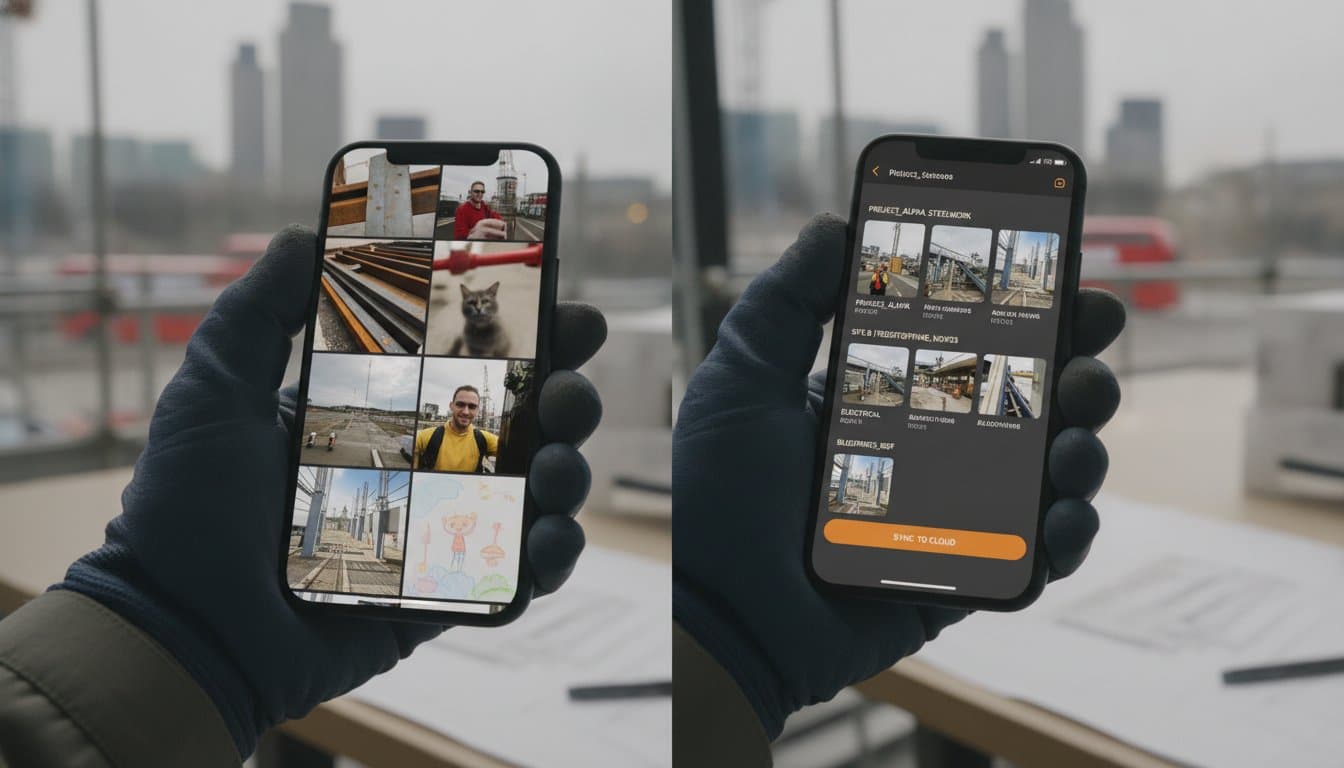
It is Sunday night and you are scrolling through a group chat. You need one specific photo of a fire-stop for an 18-metre building. It is buried under hundreds of messages about site deliveries and weather delays. 72% of UK contractors are currently trapped in this same cycle. You lose 13 hours every week to admin and photo sorting because your phone treats a site QA photo evidence capture like a holiday snap. The system is broken. Not you.
You already know that defensible documentation is the only way to navigate the Building Safety Act without constant stress. You can capture the proof you need the moment the work is done without losing your weekends to admin. This guide explains how to meet the 7-storey threshold requirements and get invoices paid faster by using a dedicated work camera instead of a messy gallery.
Key Takeaways
- Reclaim your time. Stop losing 13 hours every week to manual photo sorting and administrative busy work.
- Protect your reputation. Learn why group chats create a liability for site QA photo evidence and how to fix it.
- Build defensible records. Select a Photo Type at the moment of capture to keep evidence organised and out of your personal gallery.
- Meet legal standards. Understand the Golden Thread requirements for buildings over 18 metres to satisfy the Building Safety Regulator.
Table of Contents
- The hidden cost of relying on group chats for site QA photo evidence
- How to capture defensible QA evidence in four steps
- Meeting the Building Safety Act and the Golden Thread
The hidden cost of relying on group chats for site QA photo evidence
It is 8 PM on a Sunday. You are sitting on the sofa, but your mind is back on the site. You are scrolling through a group chat, desperately trying to find one specific photo of a fire-stop installed three weeks ago. You need it for an audit tomorrow morning. Instead, you find memes, delivery updates, and photos of someone's lunch. This is the reality for the 72% of UK construction professionals who still rely on group chats for work. The system is broken. Not you.
Relying on a disorganised gallery for site QA photo evidence carries a heavy price. It leads to disputed invoices and failed audits. Your job is to do the work and get paid. It is not to spend your life organising photos you already took. The proof should exist the moment the work is done.
The 13-hour admin leak
UK contractors lose an average of 13 hours every week on non-optimal activities. A huge chunk of that time is spent sorting through photos. Every minute you spend hunting for evidence is a minute you are not winning the next job. It is frustrating to see a critical structural detail sandwiched between family holiday pictures and a screenshot of a grocery list. This admin leak drains your energy and your profit margins. It turns your phone gallery into a source of stress rather than a tool for work.
Why group chats are not defensible
Photos sent via group chats are not professional records. They often lack the immutable metadata required for true Quality Assurance. When evidence lives in a chat, it is just a conversation. It is not a record. To protect your business, you need defensible evidence that is clear from the moment of capture. Without GPS stamps and timestamps, your photos are just images, not proof. If a dispute arises, a grainy photo in a chat history will not save your invoice.

How to capture defensible QA evidence in four steps
You have finished the install. The work is done to a high standard. But if your evidence is just a blurry snap in a messy phone gallery, you are essentially doing the job twice. Stop using your personal camera app for professional records. It was designed for holiday photos, not for providing site QA photo evidence that stands up to scrutiny. You need a dedicated work camera that captures the truth the moment it happens.
The first rule of defensible evidence is separation. Photos must be stored directly in your work app. They should never hit your phone gallery. This keeps your personal life private and ensures that work files don't get lost amongst family pictures. If a photo is incorrect or the lighting is poor, do not try to delete the history. Mark it as Invalid instead. This creates a transparent, honest trail that auditors trust. The work happened. Now prove it. The proof should exist the moment the work is done.
Selecting the Photo Type
One extra tap. That is all it takes to stay organised. Before the shutter clicks, you must manually select a Photo Type. Avoid the trap of auto-tagging. Whilst technology is helpful, intentional selection by a professional builds a far more defensible trail. This simple habit organises the work photo library instantly for the boss. It transforms a random image into a specific record of a fire-stop, a bracket, or a weld. You can see how this works with a professional work camera designed for the field.
Building the evidence record
Every photo needs a digital fingerprint. This requires immutable metadata including the exact GPS location, time, and the user who took the shot. Under the Building Safety Act, these details are vital for the Golden Thread. Use Thanex camera features to ensure every shot is locked with this data. The connection should be read-only. It works with your AI assistant to help you find evidence later, but the core record remains untouched and secure.
Meeting the Building Safety Act and the Golden Thread
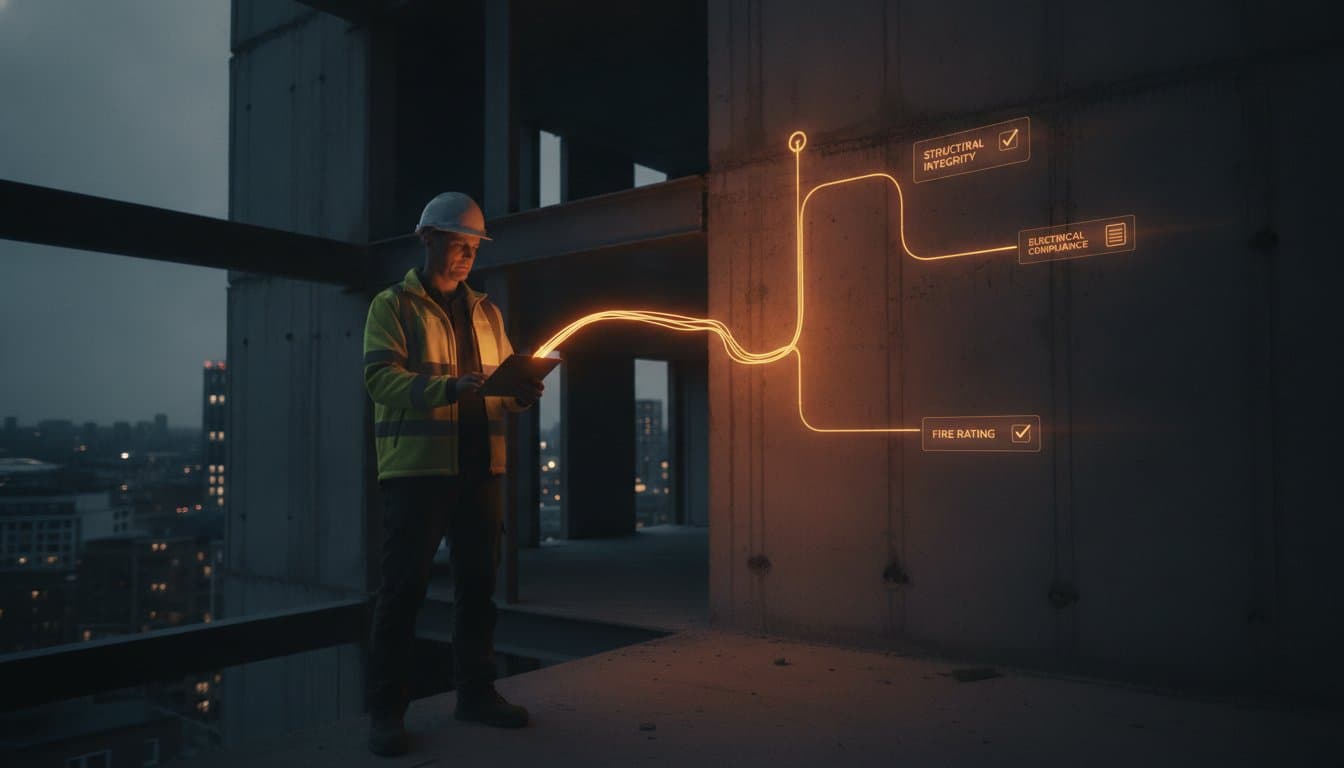
Compliance is not just a box to tick. It is about protecting your reputation and your profit. For buildings over 18 metres or 7 storeys, the Golden Thread of information is now a legal requirement. This means every fire-stop, every bolt, and every weld must be documented. The Building Safety Act has changed the rules. Digital site QA photo evidence is the only way forward.
Disconnected systems are a massive risk to your business. We know the story well. A contractor once faced a rigorous audit with their project history scattered across dozens of personal phones and group chats. They tried to save everything to a USB stick, but they ended up with 15,000 photos that were effectively useless. They had no dates, no locations, and no context. They had done the work, but they could not prove it. The system was broken. Not them.
The 18-metre threshold explained
Higher-risk buildings in the UK are defined as those reaching at least 18 metres or 7 storeys. On these specific projects, the Building Safety Act guidance requires a complete, accurate digital record. You can see how this impacts your specific trade by reviewing the latest construction industry standards. Paper records and messy galleries will no longer pass a Building Safety Regulator audit.
Building trust with the Golden Thread
The Golden Thread is more than just a folder of files. It is the chronological, unchangeable story of the build from start to finish. A work camera creates this record for you automatically as you work. When you reach the handover stage, your evidence management is already finished. You have built the kind of trust that wins repeat work and protects your invoices. Thanex captures the site QA photo evidence you need for a BSA audit without the admin burden. Capture Work. Build Trust.
Thanex launches May 2026. Get early access at thanex.uk/early-access.
Protect your reputation and reclaim your time
You don't have to keep losing 13 hours every week to the chaos of a phone gallery. The system is broken. Not you. By switching to a dedicated work camera, you ensure every piece of site QA photo evidence is ready for the 18-metre building threshold requirements before you even leave the site. The proof should exist the moment the work is done.
Your job is to do the work and get paid. Not prove it twice. By using a chronological, unchangeable record, you build the kind of trust that wins repeat work. You can stop scrolling through group chats and start focusing on the next project. Capture Work. Build Trust.
Thanex launches May 2026. Get early access at thanex.uk/early-access.
Frequently Asked Questions
Can I use standard phone photos for Building Safety Act compliance?
Standard phone photos are rarely sufficient for site QA photo evidence because they lack immutable metadata like GPS and timestamps. Your personal gallery does not separate work from your private life; it just stores images without professional context. To meet the Golden Thread requirements, you need an organised trail that shows exactly what happened, where, and when. This ensures that every photo is a defensible record rather than just a snap.
What is the 18-metre threshold for higher-risk buildings in the UK?
The 18-metre threshold refers to buildings that are at least 18 metres high or have at least 7 storeys. These are classified as higher-risk buildings under the Building Safety Act 2022. For these specific projects, maintaining a digital record of all site QA photo evidence is a legal necessity. This ensures that safety information is accurate and accessible throughout the building's entire lifecycle.
Why is it better to use a work camera instead of a group chat for QA?
Group chats are conversations, not professional records. Whilst 72% of UK contractors use them for ease, these platforms strip away vital data and make evidence impossible to find later. A work camera ensures that photos are stored directly in a secure, read-only environment. It means your proof is ready for an audit without you having to scroll through hundreds of messages about site deliveries or weather delays.
How much time do construction managers really lose to photo admin?
UK managers lose an average of 13 hours every week to non-optimal activities like sorting, tagging, and filing photos. This is the "old-you cost" of a broken system. By using a work camera where the proof exists the moment the work is done, you reclaim that time. You stop proving the work twice and can finally get your weekends back from the burden of admin.
Thanex launches May 2026. Get early access at thanex.uk/early-access.